
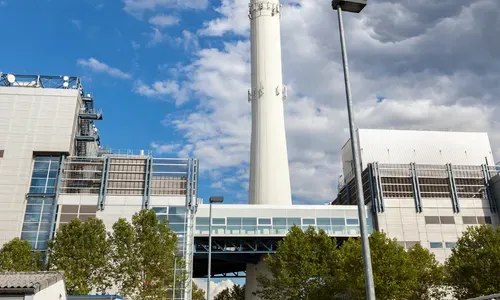
Energy from waste (EfW) is an integral part of the UK’s waste management system. It helps generate electricity and heat from residual waste while reducing reliance on landfills.
While critics have raised questions about its overall efficiency, the focus of the EfW debate is changing. It now centres on carbon emissions, future capacity, carbon capture and recycling reforms.
Ahead of the 2026 Environmental Services & Solutions (ESS) Expo, we explore what this evolution means for UK operators, local authorities, waste management companies and investors.
>>MORE: Register for free tickets to ESS Expo today.
What Is Waste-to-Energy?
Waste-to-energy is the process of recovering energy from residual waste that can’t be practically reused, recycled or composted. In the UK, most EfW facilities use controlled thermal treatment to burn residual waste. This then gets converted into electricity and, increasingly, heat, which then goes into nearby homes, corporate offices and industrial sites.
What happens to the remaining waste?
About 15%–25% of the source waste remains as ash when it’s burnt. This ash can be of two types: incinerator bottom ash (IBA) and fly ash.
Fly ash, which makes up 10%–20% of the total ash, generally contains no additional materials worth recovering. The goal is to process it so that the final gas leaving an EfW facility contains only water vapour and carbon dioxide and has minimal impact on the environment.
IBA is processed further to extract valuable materials, including iron and steel.
Why Does the UK Use EfW?
Despite ongoing debate, EfW plays an integral role in managing waste.
“Even under the most optimistic recycling scenarios, millions of tonnes of residual waste will continue to require treatment,” Andrew Howie, commercial director at leading UK-based EfW operator ENCYCLIS and a speaker at the upcoming Energy, Fuels & Decarbonisation (EFD) Expo, says. “EfW remains the most efficient, resilient and environmentally responsible solution for managing that residual fraction, avoiding landfill while recovering energy and materials that would otherwise be lost.”
Today, EfW supports the UK's waste management system in four major ways.
Landfill diversion
EfW reduces the amount of waste sent to landfills, which, in turn, reduces methane emissions generated when biodegradable waste decomposes. Diverting residual waste from landfills has contributed to substantial reductions in waste sector emissions over the past two decades.
Energy generation
Unlike weather-dependent renewable technologies, EfW facilities can generate electricity and heat year-round, providing a reliable energy source.
Waste management resilience
Even with ambitious recycling and waste reduction scenarios, some residual waste remains. EfW helps ensure that this waste is treated within the UK rather than exported overseas or sent to landfills.
Resource recovery
Resources recovered from IBA are widely used in construction and civil engineering projects. This recovery supports the circular use of metals, in line with the UK’s goal of meeting more of its critical materials demand through recycling.
How Much EfW Capacity Does the UK Have?
As investment in energy recovery infrastructure has increased, so has the UK’s EfW capacity. Today, dozens of EfW facilities operate across England, Scotland, Wales and Northern Ireland, making EfW an established part of the UK’s waste management system.
According to the Environmental Services Association (ESA), England is expected to have around 18.8 million tonnes of EfW capacity by 2035, compared to residual waste arisings of 19.4 million tonnes. These figures suggest the market may be approaching equilibrium and that expected treatment capacity is broadly aligned with future demand.
The debate today centres on whether additional facilities are still needed in specific regions and whether future recycling reforms will help meet the need for new infrastructure.
Some believe the UK has sufficient EfW capacity
Some analysts believe existing and planned facilities are sufficient to meet future demand. They claim that the gap between expected residual waste volumes and planned EfW capacity is relatively small.
The government is advancing policies to reduce residual waste, which could help reduce this gap. Extended producer responsibility, deposit return schemes, Simpler Recycling reforms and wider circular economy initiatives all aim to increase recycling rates and reduce the volume of waste requiring treatment.
If these policies are successful, future demand for EfW capacity could be lower than current predictions suggest.
Others believe additional capacity is needed — in some places
Other experts argue that official figures don’t tell the whole story. Even if overall EfW capacity is sufficient at a national level, it’s unevenly distributed across the UK. Some regions have to transport waste over longer distances for treatment, putting them at a significant disadvantage compared with others in extracting value from EfW.
Uncertainty around future waste volumes, population growth and the impact of recycling reforms also makes long-term demand difficult to predict.
As a result, this side of the debate is increasingly focused on whether the UK has sufficient capacity in the right places, rather than simply on whether it needs additional EfW facilities overall.
The UK is “moving closer to overall capacity balance, but opportunities remain where modern, efficient facilities can address regional infrastructure gaps, improve environmental performance and replace obsolete assets,” Howie says.
>>MORE: See the ESS Expo 2026 Speaker Agenda.
Why Is EfW Controversial?
Supporters view EfW as a critical means of managing residual waste, while critics question whether it aligns with long-term circular economy and climate objectives.
The circular economy argument
One of the main criticisms of EfW is that it could create ongoing demand for residual waste, discouraging waste reduction and recycling. Critics argue that investments should prioritise waste prevention, reuse and recycling rather than expanding treatment capacity.
Supporters respond that the EfW process itself is designed to manage waste that can’t be prevented, reused or recycled; some residual waste remains regardless of how it’s treated. So EfW is a complementary part of the waste management system rather than a competitor to recycling.
“The debate should therefore not be framed as recycling versus EfW,” Howie says. “The challenge is ensuring each technology performs its role effectively within an integrated resource management system.”
Local environmental concerns
Plans for EfW facilities often face public scrutiny over their impact on the local landscape, regional traffic, air quality and local population health. Although modern facilities work under strict environmental permits and emissions limits, these concerns continue to shape local debates.
Operators have responded by boosting their engagement with the community right from the planning stage and increasing transparency around emissions and environmental performance.
The carbon emissions challenge
Carbon emissions remain one of the sector’s biggest challenges. While EfW generally performs better than landfills from a greenhouse gas perspective, the burning of waste produces carbon dioxide, which is coming under increasing scrutiny as the UK moves towards net zero in 2050.
Critics argue these emissions are a hurdle to meeting long-term climate goals, particularly when compared with lower-carbon electricity generation methods such as solar, wind or hydropower.
How Carbon Intensive Is EfW?
EfW produces higher carbon emissions than many other forms of electricity generation because residual waste contains fossil-derived materials such as plastics. However, when responding to the carbon emissions argument, policymakers, regulators and industry stakeholders often compare EfW with landfills rather than renewable electricity, because both are systems designed to manage residual waste. Since landfills generate significant methane emissions, many consider EfW the better option.
Where EfW emissions come from
Not all carbon emissions from EfW facilities are equal.
Some come from fossil carbon, which is found in plastics and other fossil-derived products. When burnt, these materials release carbon dioxide that contributes directly to greenhouse gas emissions.
Others are biogenic carbon, which originates from food waste, paper and wood. Because these materials come from plants that absorb carbon dioxide during growth, many frameworks treat these emissions differently.
So most decarbonisation strategies focus on reducing fossil carbon in residual waste management.
Why EfW is under increasing carbon scrutiny
As the UK works towards net zero, emissions from the waste sector are receiving greater attention.
The Climate Change Committee has highlighted the need to reduce emissions from harder-to-abate sectors. EfW is increasingly part of this discussion because, unlike many other parts of the power sector, it still produces direct carbon emissions when waste is burnt.
So EfW operators are placing greater emphasis on emissions reporting, operational efficiency and long-term decarbonisation strategies.
EfW versus landfills
Landfills generate methane as biodegradable waste decomposes, making them one of the waste sector’s largest sources of greenhouse gas emissions. The UK’s move away from landfills and toward recycling and EfW has helped reduce overall emissions.
However, EfW releases carbon dioxide. Which option performs better environmentally depends on various factors, including waste composition, landfill gas capture rates, energy recovery efficiency and the wider energy mix.
The question is no longer whether EfW or landfills are preferable. Stakeholders are now asking how residual waste can be managed while supporting waste prevention, recycling and decarbonisation.
Can Carbon Capture Make EfW Net Zero?
The carbon capture and storage (CCS) framework involves capturing carbon dioxide emissions before they’re released into the atmosphere and transporting them for permanent storage.
“Carbon capture is the only viable pathway to materially decarbonise residual waste treatment infrastructure and will play a critical role in helping the sector meet long-term climate objectives,” Howie says.
As government support expands, interest in CCS is growing, and the industry is developing shared transport and storage infrastructure. However, significant technical, financial and infrastructure challenges remain.
The case for carbon capture
Supporters of carbon capture point to several potential benefits.
- Substantially lower emissions: CCS can significantly reduce direct emissions from EfW facilities and help operators align with future carbon goals.
- Easier compliance with future regulations: Lower emissions can help facilities respond faster to tightening climate policies and carbon pricing mechanisms.
- Potential negative emissions: A significant part of residual waste contains biogenic carbon. Capturing and permanently storing these emissions could remove carbon from the atmosphere.
FCC Environment has highlighted carbon capture as a promising pathway to reduce emissions, while operators continue to use EfW to manage residual waste.
The challenges
Critics frequently point to several challenges.
- Significant upfront investment: CCS requires substantial capital expenditure, potentially increasing operating costs.
- Limited transport and storage infrastructure: Many parts of the UK still lack the pipelines, transport networks and storage infrastructure needed to move and permanently store captured carbon dioxide.
- Energy requirements: CCS requires additional energy to operate, reducing the net energy output of EfW facilities.
- Policy uncertainty: Operators continue to demand greater clarity around funding mechanisms, carbon pricing and future regulatory requirements before committing to major CCS investments.
Whether CCS becomes widespread across the EfW sector will depend on technological progress, investment in transport and storage infrastructure and long-term policy certainty.
“At Encyclis, we are developing the UK’s first full-scale carbon capture facility at Protos ERF in Cheshire,” Howie says. “Beyond reducing emissions, it has the potential to support the development of carbon removals, decarbonised baseload electricity and a new generation of low-carbon waste infrastructure. We believe this project will help establish a model that can be replicated across the UK and internationally.”
What Decarbonisation Means for the EfW Sector
Stakeholders across the EfW sector will need to adapt as carbon pricing evolves and climate targets become more demanding.
Plant operators
Plant operators will need to focus on improving efficiency and reducing emissions as they prepare for tighter carbon regulations. For them, the goals are to:
- Improve efficiency and reduce emissions
- Increase heat utilisation and energy recovery
- Identify newer carbon capture opportunities
- Prepare for future carbon pricing mechanisms
Local authorities
Local authorities must balance environmental targets with affordable, reliable waste services as residual waste volumes change. They will work toward:
- Balancing environmental objectives, affordability and service reliability
- Planning for changing residual waste volumes
- Considering emissions performance in deciding future waste strategies
Waste management companies
Waste management companies are expected to expand recycling and resource recovery services while reassessing the role of EfW in a stronger circular economy. They will:
- Expand resource recovery and circular economy services
- Adapt to evolving initiatives in recycling and waste reduction
- Assess the future role of EfW within broader waste management systems
Investors
Investment decisions are increasingly shaped by carbon costs, policy developments and long-term decarbonisation plans. Investors should:
- Assess carbon-related risks and opportunities
- Monitor carbon capture deployment and policy developments
- Evaluate long-term resilience in a low-carbon economy
>>MORE: See the 2026 ESS Expo exhibitors.
What Waste-to-Energy Companies Are Watching in 2026
Three issues are expected to dominate discussions throughout the year.
Carbon pricing and the UK Emissions Trading Scheme (ETS)
Under current government plans, EfW facilities will be brought into the UK Emissions Trading Scheme (ETS), requiring operators to purchase carbon allowances for their emissions. The change is expected to increase operating costs while strengthening the business case for improving efficiency, reducing emissions and investing in CCS.
“Successful implementation will require careful policy design to ensure residual waste continues to move up the waste hierarchy rather than reverting to landfill or export,” Howie says.
Carbon capture deployment
As CCS moves closer to commercial deployment, operators will be keeping an eye on government funding, transport and storage infrastructure, and the development of industrial decarbonisation clusters.
Recycling reforms and residual waste
Extended producer responsibility, deposit return schemes and Simpler Recycling reforms are expected to affect future residual waste volumes. Assessing how these policies affect feedstock availability and long-term demand for EfW capacity will remain a key focus for policymakers, operators and investors.
Overall, “future success will increasingly be defined by quality rather than volume,” Howie says. “Stakeholders should focus on facilities that demonstrate high operational reliability, strong environmental performance, efficient energy recovery and the ability to integrate future technologies such as [CCS] and district heat networks.”
Join the Debate
EfW capacity, carbon and decarbonisation are set to feature prominently at the Energy, Fuels & Decarbonisation (EFD) Expo, part of this year’s ESS Expo, coming to The NEC Birmingham on 16–17 September.
Secure your free tickets to join representatives from Encyclis, the Climate Change Committee, FCC Environment and more in discussing the future of EfW in the UK.
FAQs: Energy From Waste in the UK
What is waste-to-energy?
Waste-to-energy is the process of generating electricity, heat or other forms of usable energy from residual waste that can’t be reused, recycled or composted. In the UK, most waste-to-energy facilities burn residual waste in incinerators to recover energy while diverting waste from landfills.
Is energy from waste renewable?
Energy from waste is generally considered partially renewable because a portion of residual waste consists of biogenic materials such as food waste, paper and wood. However, the waste also contains fossil-derived materials such as plastics. Because these materials aren’t renewable and release fossil carbon when burnt, EfW isn’t classified as a fully renewable energy source.
How much carbon does an EfW plant produce?
Carbon emissions from an EfW plant depend on many factors, including waste composition, facility efficiency and operational practices. Increasingly, operators are exploring carbon capture technologies and improving resource recovery measures to reduce their overall carbon footprint.
Author Bio: Angeliki Tsolka is a sustainability professional with more than 13 years of international experience across the UK, Europe, and the Middle East. She has worked on major infrastructure, energy, industrial, and urban regeneration projects, supporting clients through sustainability-focused assessments, reporting, and regulatory compliance. With a strong technical background and previous experience as a Waste Management Consultant in the UK, she brings both practical industry knowledge and strategic sustainability expertise to her work.
--------------------------------------------------------------------
About ESS Expo: Environmental Services & Solutions Expo (ESS Expo) is the UK's largest cross-sector environmental event, taking place annually at the NEC Birmingham. ESS Expo 2026 runs 16-17 September and unites seven co-located industry shows spanning resource, waste management, recycling, water management, air quality, sustainable engineering, decarbonisation, land remediation, circular economy, net zero, energy from waste, and geotechnical engineering. Register free at ess-expo.co.uk.
--------------------------------------------------------------------







